


Anxiety is your body's alarm system going off when there's no clear danger in front of you or staying on long after the moment that triggered it has passed. Say a meeting goes fine, the feedback is positive, and the conversation is long over, but your chest is still tight, and your mind is already scanning for the next thing that could go wrong.
That's anxiety, your body's fight-or-flight response switched on even when nothing's actually wrong, a state often called hypervigilance. Over time, it stops feeling like a reaction to specific events and starts feeling like your default state. When this pattern persists across most areas of life rather than one specific trigger, it's often what's clinically described as generalised anxiety disorder.
Everyone gets anxious sometimes, before an exam, a big decision, a first day. That's a normal stress and anxiety response, and it usually passes once the situation does. But when the worry stays even after the trigger is gone, when anxiety disorder symptoms start showing up physically, or when you notice yourself quietly avoiding things because of how they make you feel, that's when anxiety treatment becomes worth considering, not later when things feel worse.
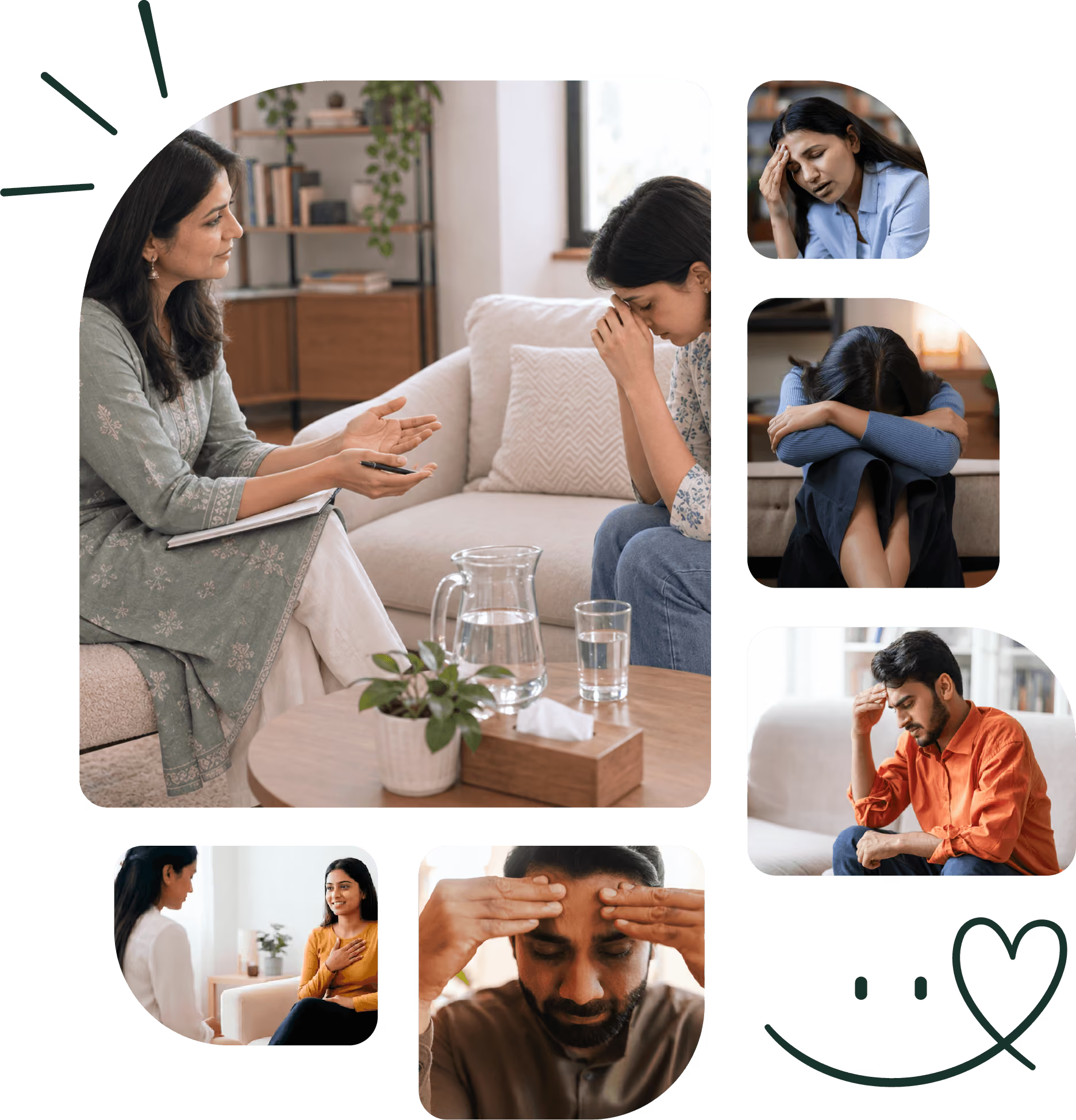
Your first session is really a conversation to understand your anxiety: when it started how it's changed, what you've already tried, and what you're hoping for.
What usually comes out of it is that your anxiety has a shape, specific patterns, spec triggers. Once you can see that shape, it becomes something you can actually work on, instead of a vague feeling you're stuck carrying.
The approaches used at The Full Circle for anxiety treatment include CBT, DBT, REBT, estalt, and mindfulness-based work, each addressing a different dimension of what maintains anxiety. The approach used is always guided by what fits you.
Some people work through their anxiety in a few months. Others go deeper, and it takes longer. Your therapist will always tell you honestly what they're seeing and what they think will help.

Coping and thriving aren't quite the same thing. If it takes ongoing effort just to keep your anxiety in check, that effort is worth taking seriously, not just what happens when things visibly break down. Anxiety treatment works best when sought before the patterns become deeply entrenched.
Meditation is genuinely valuable, and there's no need to give it up. It tends to ease the feeling in the moment, while therapy looks at why the feeling keeps returning in the first place. The two work well together rather than in place of each other.
Talking to people you trust matters, and we'd encourage you to keep doing that. A therapist offers something different: a degree of professional distance, and no personal stake in how things unfold for you.
For most people with anxiety disorders, it does not disappear completely, but it does become smaller and far less disruptive. The goal of anxiety treatment is not zero anxiety. It is anxiety that no longer runs your day.
Rarely just one or the other. Anxiety typically develops from a combination of temperament, life circumstances, and sometimes family history. It isn't a reflection something you did wrong.
It varies by person, but many notice some relief within the first few sessions. More lasting change typically develops over the following months of consistent anxiety therapy.
For mild to moderate anxiety, therapy alone is often sufficient. Where medication may help that's a separate discussion best had with a psychiatrist, alongside your therapy.
The most consistent signs of anxiety disorder include worry that persists beyond the triggering situation, physical symptoms like chest tightness, disturbed sleep, and an unsettled stomach, avoidance of situations that trigger the feeling, difficulty concentratin and a generalised sense of anticipatory dread. Anxiety disorder symptoms do not always present as visible panic; for most people, they are quieter, more persistent, and easily mistaken for stress or personality traits.
Anxiety is a normal human response to pressure or uncertainty. An anxiety disorder is when that response becomes disproportionate, persistent across time, and begins to interfere with how you function day to day. The distinction matters less than most people think for the purpose of seeking help. If anxiety disorder symptoms are affecting your quality of life consistently, anxiety treatment is a useful place to start.
A panic attack is an acute episode of intense physical and emotional distress, including a racing heart, difficulty breathing, and a sense of losing control. It differs from generalis anxiety in that it is sudden and peaks quickly. Anxiety disorder symptoms associated with panic are among the most frightening and also among the most treatable with proper anxiety treatment.
Yes. For most people, anxiety treatment without medication is highly effective. Approaches including CBT, REBT, DBT, gestalt, and mindfulness-based therapy address the thinking patterns, behavioural responses, and nervous system habits that maintain anxiety disorders. Many people experience meaningful and lasting improvement through therapy alone.
If anxiety disorder symptoms are affecting your sleep, concentration, relationships, work, or ability to simply rest, that is sufficient reason. You do not need to wait until it become worse. The people who benefit most from anxiety therapy are those who come while they still have the capacity and resources to engage with the work, not those who arrive after years of managing alone have depleted both.