


5 Signs Your Relationship Needs Couples Therapy — And Why Getting Help Is a Sign of Strength
There is never a single moment when you realise something has shifted in your relationship, nor can you pinpoint that exact moment when issues started to appear.
It is more often a slow accumulation of discomfort in any couple's relationship. The dinner table where conversation still happens between them , but starts to sound like a logistics meeting with discussions like who is picking up the children, what needs to be paid, what should i add to the grocery list. The realisation that you and your partner have not laughed together, or genuinely laughed is longer back than you can remember. The feeling of lying in bed next to someone and feeling, quietly and without drama, is quite lonely and exhausting.
In a highly cultural society admitting that ongoing issues in your relationship , or that communication breakdown needs help carries a particular weight. Here in most cases marriage is not just a relationship between two people — it is a commitment that families have invested in, that society has an opinion about, and that you yourself have built your sense of stability around. Saying that something is wrong or that your marriage needs professional counselling to sort out differences feels, to many couples, like pulling at a thread that might unravel something much larger than a relationship.
So most couples wait. They defer their meeting with a psychologist and manage on their own. They adapt around the problem rather than addressing it. And by the time they seek help from a couples counsellor, they often realise if they had come earlier and visited their therapist.
This blog is for couples undergoing some kind of relationship stress, but still not decided whether to seek relationship help or not. Not because your relationship is failing but because you have noticed something, and you are not sure what to do with it yet, or because there is a stigma that society around will know about it.
Before the Signs — A Note Worth Reading First
The five signs mentioned below are not a checklist to diagnose whether your relationship is in trouble. They are patterns worth paying attention to things that most couples recognise not as sudden revelations, but as things they have half-known for a while, or chose to ignore because of stigma culture.
Most couples who would benefit from a couples counselling session recognise themselves in more than one of these signs. That is normal. These patterns tend to move together, each one reinforcing the others. What matters is not how many of them apply to your relationship issues, but whether reading them produces that specific feeling of recognition — the one that tells you something here is closer to your experience than you would like.
One more thing worth naming before the signs: some couples stop having the argument altogether. They have learned — through enough difficult endings — that certain topics or arguments are not safe to raise in a marital conflict. They walk carefully around the things that matter most and call it keeping the peace. That careful avoidance is worth paying as much attention to as the arguments themselves. Silence that comes from mental absenteeism is very different from silence that comes from giving up.
Sign 1: You Keep Having the Same Argument in your relationship, but It Never Actually Ends
The surface of the argument changes. If it is about money this week, about something someone said at a family gathering the week before that. But underneath, the argument that couples make have the same shape and patterns every time. The same feelings get activated. The same things get said. And it ends the same way — in an uncomfortable silence, or a temporary ceasefire that both the partners know is not a resolution.
When an argument between couples recurs despite genuine attempts to resolve it, it is almost always because the surface issue is not the real issue. What is actually being argued about is something older and less visible an unmet need, an unacknowledged hurt or a request, a pattern of interaction that neither partner has fully seen from the outside. You cannot resolve couple arguments at the surface level when the real conversation is happening underneath it. In many Indian couples this recurring argument is, on the surface, about family, about in-laws, about whose parents to visit, about a comment that was left unchallenged in a room full of relatives. But underneath it is about loyalty. About feeling chosen. About whether your partner is genuinely on your side or whether they will always, in the moment that matters, stand somewhere else. Couples therapy helps both partners step back from the content of the argument and examine the pattern instead. That shift — from what we are arguing about to why we keep arguing — is usually where resolution becomes possible for the first time.
Sign 2: You Still Live Together With Your Partner But Something Has Quietly Withdrawn
You function well as a unit, but do you bond equally well? The household runs still look fine, but superficially. The children are managed well. The social appearances are maintained well too. But somewhere underneath there is persistent lag in the connection you used to have, something has quietly withdrawn. You cannot pinpoint exactly when it happened. Because It was not a single moment, it was a gradual drift, so slow it was almost invisible until one day you noticed the distance and realised it had been there for a while.
Emotional intimacy, the felt sense of being genuinely happy with each other, chosen path of togetherness do not disappear overnight. These feelings erode over time; when you both chose to ignore the growing silence between you. And because the erosion is gradual, couples often normalise it long before they talk about it with anyone. The relationship looks fine from the outside. From the inside it feels like sharing a life with someone who has become, in some way, a stranger.
This experience is particularly common among working couples. Two people who had deep connections during dating and the early years of the relationship, who went to dinners and movies and had hours to simply be together, and who have watched that connection quietly shrink as professional demands expanded to fill the space it once occupied. They are not less committed than they were. They are simply more exhausted, more time-poor, and further from each other than either of them intended.
The drift is not irreversible. But it does not reverse on its own.
And the cost of that drift rarely stays contained within the relationship. In fact it gets amplified sooner than you would expect. It shows signs that often go unnoticed because none of you have the time for it. Sleep changes. Appetite changes. Concentration at work becomes harder. Couples caught in ongoing emotional disconnection often find themselves unable to attend to their own basic needs like proper meals, adequate rest, time to simply breathe while simultaneously being unable to name what is wrong between them.
The emotional exhaustion from a relationship conflict makes the physical recovery harder, and the physical depletion reduces the capacity to bridge the emotional gap between couples. If this has started to feel familiar, that is worth taking seriously.
Sign 3: You Still Trust Each Other — But Something is missing
This is the sign couples are most reluctant to name, because trust in a relationship is associated with infidelity or serious dishonesty — and for most couples reading this, that is not what has happened. The trust that has shifted, is quieter and harder to articulate.
It is the confidence that your partner will be on your side in the moments that matter. That they will protect you in the room when you cannot protect yourself - be it anything to do with family dynamics or your job. That your vulnerabilities are safe with them — that what you share in a private moment will not become a weapon in the next argument. That when you needed them to choose you, they did.
When that trust erodes — through small moments of not being chosen, of feeling alone inside the marriage, of needs that were expressed and quietly not met — it changes the quality of the relationship in ways that are difficult to reverse without help. You are still together. You may still love each other. But you have become careful with each other in a way that was never there at the beginning.
The early picture of a relationship — the ease, the openness, the sense of being completely safe with the same person — gives way, over time and under pressure, to something more guarded. That is not inevitable. But it does not shift simply by wanting it to. It requires both partners to understand how the guardedness formed and to actively build something different in its place.
Sign 4: Something in Between a Couple That Was Never Ever Properly Resolved
Every couple argues. Every couple, in the heat of a genuinely difficult moment, says things they wish they could take back. That is not the sign we are describing here.
This sign is about a specific category of hurt, the thing that was said by one partner with particular force, or at a particularly vulnerable moment, or that landed in a place the other partner has never fully recovered from. What makes it different from ordinary couple conflict is not the original incident but what happened after. Whether there was a genuine acknowledgement. Whether the partner who caused the hurt understood the depth of what they had done. Whether the apology, if it came at all, was the kind that actually closes a wound or the kind that simply moves the conversation forward.
Many couples carry one of these moments sometimes more as an unspoken presence in the relationship. It shapes how safe each person feels to be fully honest, how much they hold back, and how quickly old wounds reactivate in new arguments. It sits between them at the dinner table. It shows up in the slight edge, in a muted voice during an otherwise ordinary conversation. It has become part of the architecture of the relationship without either partner having agreed to that.
This kind of hurt does not have to define the relationship permanently. But it rarely heals without being properly addressed because the partner who caused it may not fully understand its weight, and the person carrying it may not have found a way to say how heavy it still is.
Sign 5: The Closeness Between You and Your Partner Has Quietly Faded
Physical intimacy in a relationship is not only about sex. It is about the quality of being close the small gestures of affection that signal safety and connection, the ease of physical presence with another person, the sense of being wanted and welcomed rather than simply coexisting with. When that dimension of a relationship quietly shrinks or when the casual touches stop, when sitting close no longer happens naturally, when the warmth that used to be effortless now requires effort neither partner can quite locate, it is one of the most reliable signals that something significant has shifted.
In many Indian couples this is the sign that goes unspoken the longest. It is considered too private to raise with family and too vulnerable to bring up directly with a partner who has already become emotionally distant. And so it sits silently and gets noticed by both people, but named by neither becoming another layer of the disconnection rather than a conversation that might begin to address it.
What is worth understanding is that physical distance in a couple dynamics is almost always an emotional distance first. When two partners stop feeling genuinely safe and close with each other emotionally, the physical dimension of the relationship tends to follow, and not always immediately, not always in obvious ways, but consistently enough that therapists recognise it as one of the clearest indicators that the emotional connection needs attention.
This means addressing the emotional pattern, understanding what has created the distance and finding a way to rebuild safety between two partners. Typically it has a broader and more lasting effect on the relationship than either partner anticipated.
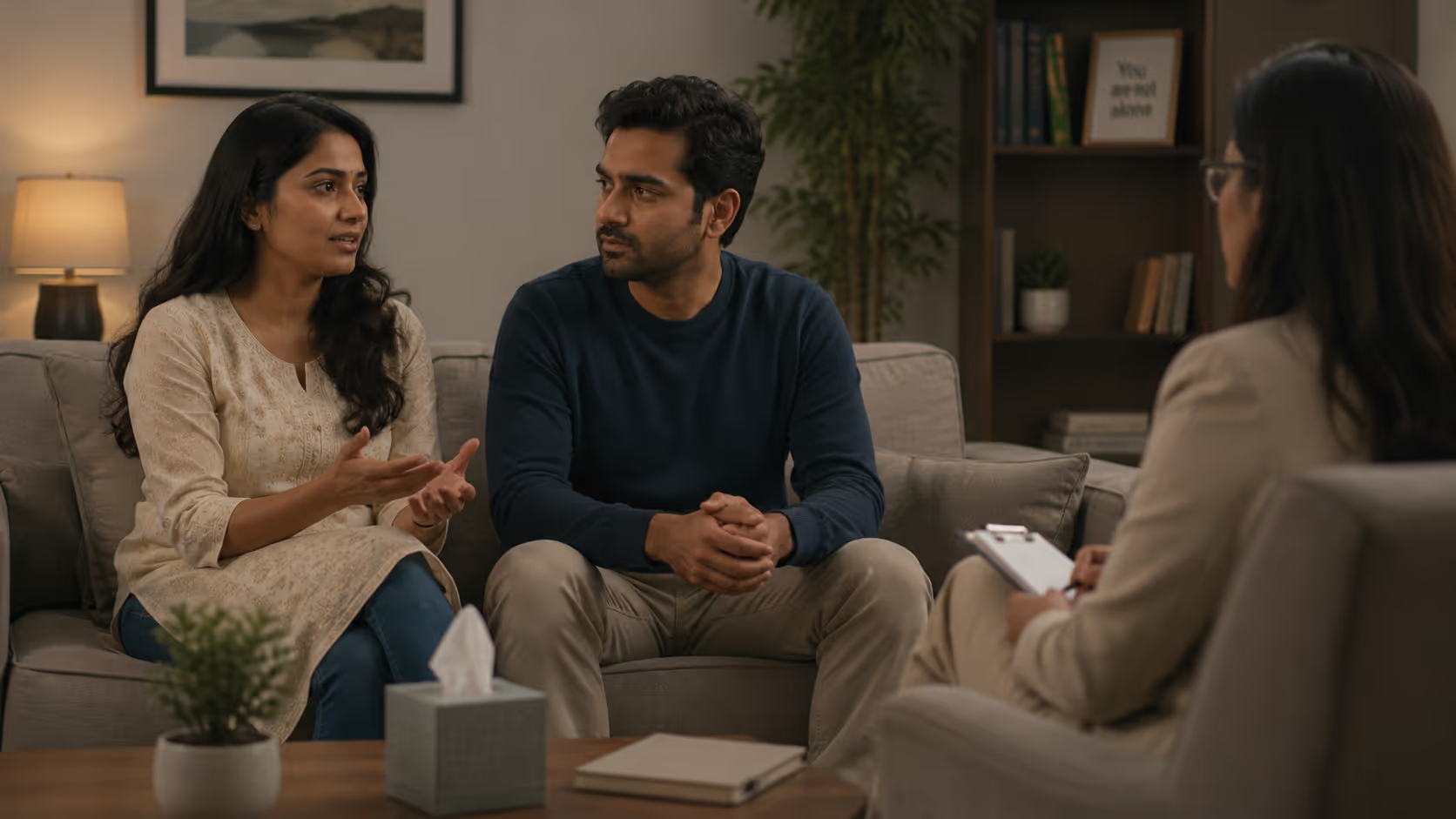
Why Couples Delay Their Therapy Sessions— And What It Costs?
Most couples who come to seek therapy from a couples counsellor say the same thing when they look back: they wish they had come much much earlier.
Not because earlier therapy would have been easier, because the conversations that need to happen in a therapy room are rarely comfortable regardless of timing. The patterns they came to address had been building for years. And the longer a pattern runs, the more both partners adapt around it, the more automatic and predictable the responses become, the more disconnected the communication between them gets, and the more the relationship organises itself around avoiding pain rather than creating connection. Many couples avoid seeking help because discussing issues with someone unknown feels daunting, or they imagine something very clinical, or emotionally exposing in a way that feels unsafe. The reality is considerably more human and empathetic, and most of them realise this after meeting a couple therapist..
When marriage carries the weight of family expectation, social identity, and shared history, saying that something is wrong can feel like much more than a private admission. It can feel like letting those people down, who are not even in the room. Many couples are concerned that reaching out to a therapist may open up this thought to everyone around that their marriage is in serious trouble. There is a worry that the family will find out. The sense of fear that needing outside help reflects a personal failing, that a good couple should be able to sort themselves out. These concerns delay help for years in relationships that would respond well to even a few months of proper support.
The couples who seek relationship therapy are not the ones whose relationships are failing. They are the ones who have decided the relationship is worth the discomfort of being honest about what is not working. That decision to take it seriously enough to get proper help is not a sign of weakness or failure. It is the most committed thing a couple can do for each other.
The most common thing couples tell me when I ask why they waited for so long is that we thought it would sort itself out, just because arguments are normal in any relationship. And they are right - arguments are normal. What they did not see was the point at which the argument stopped being about the issue, and started being about the accumulated weight of everything that had never been properly resolved. By the time many couples arrive to seek therapy from me, in most cases I find out that what they are carrying is years of adapted coping and emotional distance that became routine, silence that became safer than honesty, resentment that settled in so quietly neither person noticed when it became the normal.
The difference between couples who come early and those who come after years is significant. Couples who come in early are still emotionally reachable to each other. Although there is a hurt, there is also access. Couples who wait longer often arrive carrying accumulated disappointment and a fatigue that goes beyond the relationship itself. The task for us is not only about resolving the conflict in front of us. It is about carefully unpacking what built up in the years before they walked in.

What Couples Therapy Actually Involves
The first session is a conversation. Both partners share their experience of what has been happening and what they have been feeling, what the patterns look like from where they are standing, what they are hoping for. The therapist asks questions to understand the dynamics between them. Nobody is put on trial. Nobody's version of events is treated as the definitive account. The goal of the first session is simply to begin, to create enough safety that both partners can say something closer to the truth than they have been able to say to each other, or to their friends and family members.
Subsequent sessions build on that foundation. Gradually, with the support of a psychologist trained specifically to help couples navigate this kind of difficulty, both partners begin to realise, anticipate and see the pattern more clearly, the dynamic that keeps producing the same outcomes regardless of how hard either person is trying. And from that clearer view, a different way forward becomes possible.
The therapist does not take sides. They do not advise you on whether to stay together or get separated. They do not tell you what to do. Their role is to help both of you see what is happening and find a way through it that both of you can genuinely live with, no matter whatever that looks like.
Online couples therapy is a very practical option for couples managing demanding schedules. Living in most cities involves significant travel to find a good therapist, and this is another reason many time-pressed couples delay seeking help.
When One Partner Is Willing To Take The Therapy, And The Other Is Not
This is one of the most common situations in couples therapy referrals and one of the most painful. One partner is ready to address what is happening and one is not. It does not necessarily mean that therapy is not possible. Individual therapy for the willing partner is a meaningful starting point. It helps them understand their own patterns, clarify what they need from the relationship, and communicate it more effectively which sometimes, on its own, creates a shift in the dynamic that opens the conversation with the reluctant partner.
Sometimes sharing something that articulates what you have been feeling like a piece of writing, a conversation about what therapy actually involves is what moves a reluctant partner from closed to curious. And sometimes a partner who attends the first session with significant reservations finds that the reality of the process is different enough from what they imagined that they become more genuinely engaged.
If you are the partner who is ready and your partner is not, or vice versa, then individual therapy is not a consolation prize. It is a legitimate and often powerful place to begin.When one partner comes in alone, the focus shifts to helping them understand their own experience within the relationship like their communication patterns, their emotional responses, where they both feel unheard, where they have been reacting rather than responding. This task matters a lot in couple therapy, in its own right. And it also often changes the relationship in ways neither partner anticipated.
When one person starts communicating differently or becomes less reactive, is able to name what they actually need, stops engaging with patterns that were keeping both people stuck the dynamic between the couple tends to shift, even without the other partner in the room. Sometimes that shift is what finally opens the door. The reluctant partner notices something different and becomes curious. They come in not because they were convinced, but because something changed and they want to understand what.
If One of These Felt Particularly Close
Every relationship finds its own way to struggle. The five signs above are the most common patterns we see — but how they show up is different for every couple, shaped by their specific history, their circumstances, and who they are to each other. If one of the signs above felt particularly close to your experience, these pieces go deeper into the specific situations we work with most often at The Full Circle: Therapy is not only for relationships that are in serious trouble. It is also for two people who care about each other and do not want the emotional distance between them to grow any further than it already has.
If you have read this and recognised something, not a crisis, but a pattern, a drift, a feeling that things could be better between you then that recognition is enough to start. What I do in those early conversations is simply help couples see clearly what has been happening between them. Once the patterns are named, the work of replacing them with something healthier becomes possible. You do not have to wait until things become unbearable. Starting earlier almost always makes the process gentler, because there is still willingness, care, and genuine connection present to work with. That is a very good place to begin.
The Couples Who Respond Best and Do the Best Work in Therapy
They are not the ones in the most dramatic crisis. They are the ones who still have goodwill toward each other, or who still want to find a way through together but who have recognised that what they have been doing on their own is not getting them there.
They are the couples who decided that the relationship is worth the discomfort of being honest. Who chose to sit in a room, or on a screen with a couples counsellor trained to help, and to say the things that have felt impossible to say. That decision, more than any particular technique or approach, is usually what makes the difference. You do not need to have reached a crisis point. You do not need to know whether what you are experiencing qualifies as serious enough. If something in this blog felt close to your experience, that is enough to start a conversation.
Book a session with The Full Circle — no commitment, no pressure, just a conversation with someone who can help you understand what you are dealing with and what your options are.
Or if you would like to understand more about our approach to couples therapy first, you can find that here.